
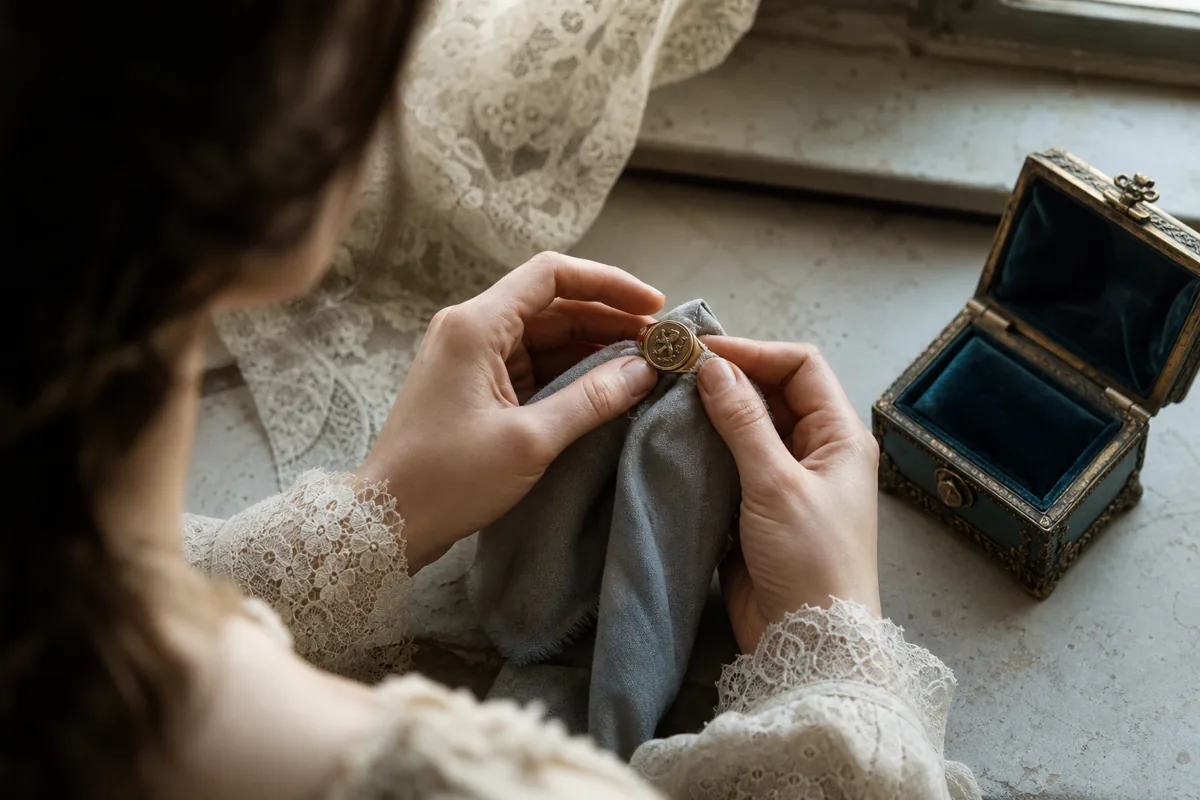
A three-part online short story about a rogue, a humiliated noblewoman, and a mysterious signet ring.
(Part two of this online short story about a rogue and a scandalised noblewoman.)
A three-part online short story about a rogue, a humiliated noblewoman, and a mysterious signet ring.
Castle Bourma was neither the grandest nor the oldest one in Agavoth. But it was certainly one of the oldest. This became increasingly a curse for the owning family in the form of endless upkeep and repairs. So it was rumoured, the current Lord Bourma, the seventh one, was mired in debts to tens of other barons and viscounts because of this. Personally, I felt it was very silly. The man should have sold the wretched pile of stones and moved to somewhere smaller, say a quaint hillside manor. Wouldn’t that save him a ton of worries?
But he didn’t, of course. Family heritage and all that. And more and more so, the rumours came to be proven true, be it the ever increasing taxes Bourma try to levy on the peasants, or the sudden dismissal of servants, or that ugly evening that saw half of his guards departing the castle, over rather unhappy circumstances. Nearer to the capital, Bourma’s woes might have been resolved by a flashy show of aggression, some punitive bullying of peasants’ families for example, or flogging for any guard who dared to vacate his post. But this was Agavoth County. Borderlands. Bourma should consider himself incredibly fortunate that his crumbling castle was not already raided by a populace that never had any much regard for the law, or for that matter even the capital itself. And so the poor lord’s misery worsens by the day. Honestly, the first thought I had at the sight of the banquet invitation was how he could possibly afford it.
Such distresses have profound effects on a man. They dwindle a man physically. At the same time, they sap away a man’s sensibility too. They leave him constantly distracted, constantly disagreeable. In many cases, they make him paranoid, intolerant of most things too.
Terribly unhealthy conditions for any man. Particularly those with demanding wives. Wives who were once been the gems of their own families, now reduced to no more than an irritation.
That’s where I entered into the story.
I didn’t do it because I disliked the Broumas. Neither was it because I found their treatment of their people or staff disagreeable. I wrote the feature because there was nothing else worth writing about. This, I blame Erikus, for dispatching me to this forsaken backwoods. Besides, it wasn’t as if it was any secret. The lady herself was blatantly visiting the hamlets thrice a week, with bodyguards and burning torches and everything. The farm hands I interviewed were more than eager to share their exploits, encouraged by the lack of any explicit order from the lady to be discreet. Believe it or not, I actually felt she wanted her infidelities to be known. Maybe she was dying for a reason for her pathetic excuse of a husband to throw her out, thus sparing her further destitute. Or maybe she was enacting vengeance against her man, in the way some women tend to do. What I’m saying is, the way she was conducting herself, the town crier couldn’t have done a better job at declaring her perfidies.
Well, turns out that I was dead wrong with my assumptions. She was outraged. When that edition of the Wyvern’s Tongue reached her, she sent bodyguards after me. Then she sent sellswords. I managed to keep the encounters bloodless each time by heading straight for the Imperial Sentry. And remaining there overnight.
I attempted to share my reasons for the article with other guests of the banquet. Naturally, to encourage agreement, I presented my tale in a more palatable angle. Their reaction, without surprise, was cautious interest. Rather than questioning my claims about Lady Brouma, they investigated the integrity of my sources.
“Would the words of farm hands truly be reliable?” One of them asked twice. A baroness, from three counties away.
“Why not? There is no reason for them to lie. Especially when they have only the best things to say about Lady Brouma.”
“What you claim about Lady Brouma sounds positive on the surface.” This was by a grossly ample merchant from Rifton, the provincial capital of Agavoth. “But if one were to read deeper … … were you not implying something else?”
“Marthus!” The baroness flinched. “Are you saying … …”
“I report only what is popularly known amongst the peasants,” I said. “Which is that the Lady Brouma is a most charitable soul who cares deeply for her people. She also takes a keen interest in the livelihood of the young and spirited. Often offering mentorship and wisdom to those who seek it.”
I was much tempted to add, “in the dead of the night,” but of course I didn’t. Besides, it was time to feast. And a proper feast it was, with plenty of roasts and stews, and five barrels of mead brought in from the Rifton. A half hour into this spread, the Broumas made their entrance. Him looking sickly and bloated, she doing the talking. The Lady Brouma began by apologising for their late appearance and inhospitality, then she explained that her lord was unfortunately taken ill after lunch. Thereafter, Lord Brouma retired while Lady Brouma sat in his stead. For the rest of the banquet, she maintained herself impeccably. As was the typical case with hostesses, she also ate very little, and spent most of the time in restrained conversations with the guests nearest to her. She never once glanced at me. Nor spoke to me.
“That was a very nasty article that you wrote about Fayena,” the baroness from three counties away, Lady Olethin, whispered when late into the meal. She was seated beside me, and had till then visibly struggled to stay silent. “You caused great upheaval in her household.”
“What I did was to allay the rumours that were flying about,” I defended. “Now we know for sure what a truly charitable person Lady Brouma is.”
“Stop using that word,” she hid her snigger with her napkin. “You and I both know what your intentions were.”
“Pray tell, what would those be?”
She didn’t reply to that. Below the table, her foot lightly nudged mine. “My husband is a far less forgiving man, towards all offences, in our land. My advice to you, do not ever consider venturing near us.”
“The Wyvern’s Tongue really does suffer a terrible reputation in some parts. Why are we so detested or fear? Do you fear us, Lady Olethin?”
Again she didn’t reply. And again her foot met mine. “I have heard, stories, about you, and the ones you are partnered with,” she continued in a much lowered tone, while her eyes remained on a set of rusty armour nailed to the wall. “You value connections, and transactions, don’t you? Fayena is a shrewd woman. She has much to share, much to give, in charitable ways. But only if you approach her in the proper way.” She smiled. “Only if you approach her, or her friends, in the proper way.”
“And how should that be?”
“A legendary rogue like yourself not aware of such workings of the world?”
“I am no rogue, madam. Only an impoverished rascal.”
For a third time, her foot grazed mine. Then her hand came. Brushing my knee just for a fleeting moment. I did not react. I kept my eyes on the rusty set of armour too.
Continue to Part Three.
Or read Part One.
Read other online short stories of mine by clicking here.
dalliance, fantasy fiction, online fiction, online short story, rogue, short story